Oil Industry Drops Lawsuit Over California County’s Fracking Ban

nrdc

From NRDC   April 6, 2015

http://www.biologicaldiversity.org/news/press_releases/2015/fracking-04-06-2015.html

Oil Company Dismisses Own Case, Ending Only Active Legal Challenge to San Benito’s Measure J

HOLLISTER, Calif.— The only oil company to sue San Benito County over a local ban on fracking and other high-intensity petroleum operations announced today it has dropped its lawsuit, leaving the voter-approved ordinance in place.

Citadel Exploration’s decision to dismiss its own case means that local fracking bans in California face no remaining active legal challenges, despite threats from the oil industry.

Last November, San Benito County residents voted overwhelmingly to pass Measure J, a local land-use ordinance that prohibits fracking, cyclic steam injection and other high-intensity petroleum operations. Measure J, which passed despite the oil industry spending more than $2 million on attack ads and other campaigning, also prohibits land use for any oil and gas development in residential zones.

Citadel Exploration filed suit against the county last month, alleging that Measure J was preempted by state law. No other legal challenges have been filed against Measure J.

San Benito Rising, a community organization that initiated Measure J, was prepared to defend the initiative its members helped pass.

“This is a great victory for our community,” said Mary Hsia-Coron, who helped spearhead the Measure J campaign. “Our volunteers worked hard to educate voters about how fracking, cyclic steam and acidizing threaten our water, our health and our economic future. Other communities should take heart that they have the power to protect what they love. They can stand up to the oil industry and say ‘no’ to these dangerous practices.”

“During this long drought, Measure J has become more important than ever,” said Paul Hain, a local farmer. “We’re grateful to our attorneys for drafting a solid initiative that can stand up to legal challenges.”

Land use and election law attorneys at Shute, Mihaly & Weinberger carefully drafted Measure J to ensure its validity.

“Local governments can prohibit high-intensity oil and gas operations under their fundamental land use authority,” said Heather Minner, an attorney with the firm.  “Measure J sailed onto the ballot without any pre-election challenges and it’s not surprising that Citadel dropped its post-election suit like a hot potato.”

“So much for the oil industry’s empty threats against communities that fight fracking pollution,” said Hollin Kretzmann, an attorney for the Center for Biological Diversity, which was also prepared to defend the ordinance in court. “With frivolous lawsuits off the table, more California communities will use their authority to ban fracking and protect their water, air, and health.”
Posted in Uncategorized | Leave a comment

What the Shell?

[Editor’s Note: This is a little history lesson to illustrate why Shell is NOT one of the “good ones.” This information is especially pertinent given the Obama administration’s 2015 go-ahead for Shell to drill in the Chukchi Sea off the northern coast of Alaska.  Also, I added the photos. ]

August 18th, 2011 by Phil Mattera

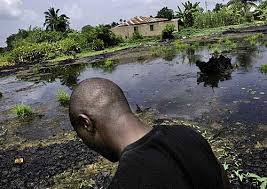
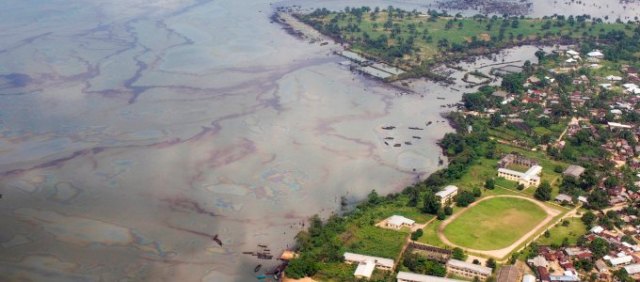
United Nations Environment Program photo of oil contamination in Nigeria.

United Nations Environment Program photo of oil contamination in Nigeria.

It seems that the multinational oil giants are taking turns having spills. After BP’s big mess in the Gulf of Mexico last year and Exxon Mobil’s accident in Montana this year, it is now Royal Dutch Shell that is spewing oil where it should not be going.

More than 50,000 gallons have leaked from a Shell pipeline off the coast of Scotland in the worst North Sea oil spill in more than a decade. Shell has had difficulty locating the source of the leak and identifying its cause.

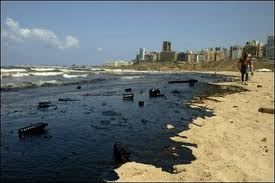
North Sea Oil Spill

North Sea Oil Spill

Just as the Exxon Mobil accident could be seen as a warning about the perils of the giant Keystone XL pipeline project extending from Canada to Texas, so can the Shell accident be viewed as a reminder about the dangers of another petroleum initiative: the proposal by Royal Dutch Shell’s U.S. subsidiary, Shell Oil, to begin drilling exploratory wells in the Chukchi Sea off the northern coast of Alaska. The North Sea accident occurred only days after the U.S. Interior Department gave Shell conditional approval for the Alaska project.

The gods seem to strike back each time the Obama Administration decides to give a green light to offshore oil activity. BP’s gulf disaster happened only days after Obama opened vast coastal areas to new drilling.

There are countless environmental reasons why Shell’s Alaska initiative is a bad idea. It should also be blocked for another reason: Shell cannot be trusted.

For the past three decades or more, Shell has been involved in a long series of accidents, spills and other mishaps at many of its offshore and onshore facilities around the world. It also has a checkered history with regard to human rights and was implicated in a scandal about false reporting about its oil reserves. Here are some of the more notorious features of the company’s track record, which I compiled for a profile on the Crocodyl wiki:

  • A 1988 explosion at a Shell refinery in Louisiana killed seven workers, whose families sued the company and collected more than $40 million in damages.

    shell-norco-1988

    1988 Shell Norco explosion, Louisiana

  • In 1989 Shell paid $19 million to settle federal charges relating to a 400,000 gallon spill at its refinery in Martinez, California that the company did not disclose for four weeks.
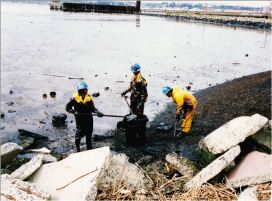
Shell Oil Spill, Martinez, CA 1988 Photo by MEG

Shell Oil Spill, Martinez, CA 1988 Photo by MEG

bill4

Shell Oil Spill, Martinez, CA 1988. Photo by MEG


  • In 1995, Shell agreed to pay $3 million to settle a lawsuit brought by the California Public Interest Research Group charging that the company had dumped illegal amounts of selenium into San Francisco Bay and the Sacramento-San Joaquin River Delta.
  • In 1995 Royal Dutch Shell was also the target of a boycott and other protests in Europe over a plan by the company and its joint venture partner Exxon to sink an obsolete offshore oil storage facility known as Brent Spar in the North Sea rather than dismantling it. Environmental groups, led by Greenpeace, warned that the structure, which contained oil sludge, heavy metals and some low-grade radioactive waste, could damage the food chain for fish in the area. The company gave in the pressure and brought the Brent Spar to shore.
  • In 1998 Shell Oil agreed to pay $1.5 million to settle federal charges that its refinery in Roxanna, Illinois was responsible for illegal discharges of pollutants into the Mississippi River.
  • In 2001 Shell Oil and three other major petroleum companies settled a lawsuit filed in California by agreeing to clean up some 700 sites in the state that had been contaminated by the gasoline additive MTBE.
  • In 2005 Shell was fined £900,000 in connection with the 2003 deaths of two workers on a North Sea oil platform as the result of a major gas leak.
Keith Moncrieff and Sean McCue died in the gas tragedy in 2003. BBC News

Keith Moncrieff and Sean McCue died in the gas tragedy in 2003. BBC News

  • In the late 2000s, Royal Dutch Shell found itself facing increasing criticism for its huge liquefied natural gas project on the island of Sakhalin in the Russian Far East. Pacific Environment, a San Francisco-based advocacy group, collaborated with Russian activists to form Sakhalin Environment Watch, which challenged the offshore Sakhalin project because it threatened the survival of the world’s most endangered species of whales—Western Pacific Grays. In 2008 the British newspaper The Observer reported that it had obtained dozens of internal e-mails showing that Shell officials in London sought to influence the conclusions of a purportedly independent environmental review of the Sakhalin project.
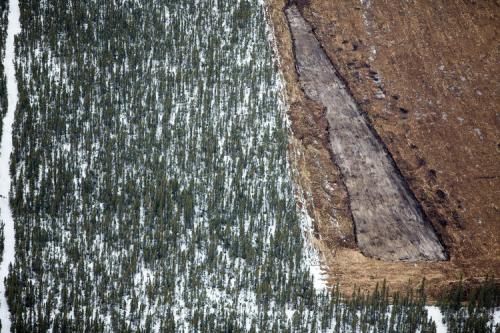
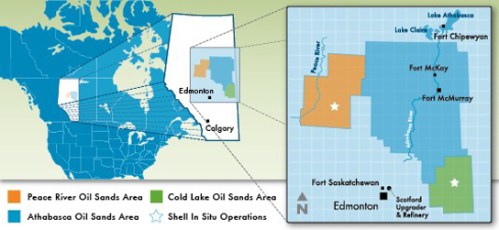
  • Shell has also been heavily involved in the environmentally disastrous tar sands industry in Canada.
3029771-slide-s-tar-sands-06

Forest removal for exploratory well pad, Shell Jackpine Mining Site, North of Fort McMurray, CA ALEX MACLEAN

shell atha

From Shell’s website

  • Shell’s tarnished human rights record dates back to the 1980s, when it was targeted for its investments in apartheid-era South Africa.
  • In the early 1990s Shell began to face protests over its oil operations in Nigeria. In 1994 the Movement for the Survival of the Ogoni People, then led by Ken Saro-Wiwa, began blockading contractors working on Shell’s facilities to bring attention to the large number of pipeline ruptures, gas flaring and other forms of contamination that were occurring in the Ogoniland region. The group described Shell’s operations as “environmental terrorism.” The Nigerian government, a partner with Shell in the operations, responded to the protests with a wave of repression, including the arrest of Saro-Wiwa, who was hanged in 1995. Shell denied it was involved, but criticspointed to the role played by the company in supporting the military dictatorship. A lawsuit charging Royal Dutch Shell with human rights violations in Nigeria was later filed in U.S. federal court under the Alien Tort Claims Act. In 2009, just before a trial was set to begin, the company announced that as a “humanitarian gesture” it would pay $15.5 million to the plaintiffs to settle the case.

quote-ken niger 2 niger delta


  • A report recently released by the United Nations Environment Program estimates that a clean-up of oil industry contamination in Ogoniland will cost at least $1 billion and take up to 30 years.

On its corporate website, Shell insists that “we are qualified to do the job right — to explore for offshore oil and gas in Alaska in a very safe and careful way.” On the Other Earth, perhaps. But not on this one.

This entry was posted on Thursday, August 18th, 2011 at 7:59 pm and is filed under Corporations & Human Rights, Environment, Oil spills, Petroleum Industry.

You must be logged in to post a comment.
Dirt Diggers Digest is proudly powered by WordPress
Entries (RSS) and Comments (RSS).

Posted in Uncategorized | Leave a comment

Chorus of Outrage as Obama Administration Approves Arctic Drilling for Shell Oil

Department of the Interior ignoring its own report on threat to climate, say environmental groups

by Nadia Prupis, staff writer at Common Dreams, Wednesday, April 01, 2015

http://www.commondreams.org/news/2015/04/01/chorus-outrage-obama-administration-approves-arctic-drilling-shell-oil

Thanks to a government ruling on Tuesday, Shell may soon be able to continue drilling in the Arctic, despite risks to the environment and animals who live there. (Photo: Day Donaldson/flickr/cc)

Thanks to a government ruling on Tuesday, Shell may soon be able to continue drilling in the Arctic, despite risks to the environment and animals who live there. (Photo: Day Donaldson/flickr/cc)

Environmental activists expressed shock and outrage on Tuesday after the U.S. Department of the Interior upheld a 2008 lease sale on the Arctic’s Chuchki Sea, opening the door for continued oil exploration in a region long eyed for drilling by Shell Corporation and increasingly strained under the effects of climate change.

The decision opens up 30 million acres in the Chuchki Sea to fossil fuel exploration and drilling, a move which state and national green groups called “unconscionable.”

“Our Arctic ocean is flat out the worst place on Earth to drill for oil,” said Niel Lawrence, Alaska director of the Natural Resources Defense Council. “The world’s last pristine sea, it is both too fragile to survive a spill and too harsh and remote for effective cleanup.”

In January 2014, the Court of Appeals for the Ninth Circuit ruled that the Interior Department had violated the law when it sold those 2008 leases—a deal that came about during George W. Bush’s presidency, but was upheld two years later by the Obama administration.

The 2014 decision ordered the Interior Department to reconsider the leases. A month later, the department admitted that drilling in the Chucki Sea was likely to have devastating consequences, with a spill risk of 75 percent or more.

“It is unconscionable that the federal government is willing to risk the health and safety of the people and wildlife that live near and within the Chukchi Sea for Shell’s reckless pursuit of oil,” said Marissa Knodel, a climate campaigner with Friends of the Earth. “Shell’s dismal record of safety violations and accidents, coupled with the inability to clean up or contain an oil spill in the remote, dangerous Arctic waters, equals a disaster waiting to happen.”

“Ignoring its own environmental review, the U.S. Department of the Interior has opened the door for drilling in the remote and iconic Arctic Ocean,” said the Sierra Club on Tuesday.

“It’s shocking that the Department of the Interior would knowingly move forward with a plan that has a 75 percent chance of creating a major spill in the Chukchi Sea. We can’t trust Shell or any other oil company with America’s Arctic,” Cindy Shogan, executive director of the Alaska Wilderness League, added. “Shell has proposed an even dirtier and riskier Arctic drilling program for this summer. The Obama administration has seen the impacts of what a major oil spill looks like.”

The Bureau of Ocean Management will next conduct an environmental assessment on Shell’s exploration plan for the Chuchki Sea, which could take 30 days or more.

The Chuchki Sea is home to an estimated 2,000 polar bears and serves as the feeding grounds for migratory gray whales.

“The industrial oil development that Interior hopes will flow from its decision to approve the Chukchi lease sale gives us a 75 percent chance of a large oil spill and a 100 percent chance of worsening the climate crisis,” Rebecca Noblin, Alaska director for the Center for Biological Diversity, added. “I don’t like those odds.”
This work is licensed under a Creative Commons Attribution-Share Alike 3.0 License

Posted in Uncategorized | Leave a comment

April brings 2015 Refinery Corridor Healing Walks

The Koch Brothers Petcoke facility across the water in Pittsburg, CA. Photo by TGriffith

The Koch Brothers Petcoke facility across the water in Pittsburg, CA. Photo by TGriffith

http://martinezgazette.com/archives/20947

On Saturday, April 18, a group of local residents will be walking – yes, walking – from Pittsburg to Martinez as part of the 2015 Refinery Corridor Healing Walks. The April 18 walk will kick off four walks this summer that will take us from Pittsburg to Martinez to Benicia to Rodeo to Richmond. Led by Idle No More, the 17-mile nonviolent walk from Pittsburg to Martinez will call attention to the pollution caused by local refineries and envision a “just transition” from fossil fuels to a cleaner, more habitable community. The walks are not protests – they are led by Native American elders in prayer, focusing on healing the land, air and water from the devastation of the oil industry.

The reason the April 18 walk will begin in Pittsburg is because of the proposed WesPac oil terminal, which – if approved by the Pittsburg City Council – would activate a huge oil infrastructure project that has the potential to pollute and endanger families who are literally living across the street from the site.

The following month on Sunday, May 17, a second walk will begin in Martinez at Marina Park, at the end of Ferry Street. We will walk from Martinez and go across the bridge to the Valero Refinery in Benicia. The focus of that walk will be on the issues affecting Martinez residents, and how we want to re-envision our future beyond fossil fuels.

Why do we need to think about moving beyond oil? Because the limitations of oil are real. British Petroleum (BP) reported in July 2014 that “total world proved oil reserves…are sufficient to meet 53.3 years of global production” (Source: BP Statistical Review of World Energy, 2014). That means in 53 years, these refineries will run out of stuff to process. At that point, what will be left of our communities, our jobs, and our transportation options? And who will clean up the land and water that Big Oil leaves behind?

Here in Martinez, the refineries, coke plants and other industrial facilities around us produce a toxic soup of pollution that we breathe in every day. While this pollution may be mostly invisible, it is still deadly. Pollution hurts our children and our elderly, and yet these cumulative effects are never acknowledged. In the past few months, Martinez residents have witnessed a spill in the Carquinez Strait, as well as a fire, equipment malfunctions and heavy flaring at the Shell and Tesoro refineries, while the refinery repeatedly assures the community that “there’s nothing to worry about.” Late last year, the Tesoro refinery had loud booming noises and massive flares raging for over a month, turning the night sky a pulsing orange, but the refinery told the community it was just “normal flaring.” Without adequate air monitoring or ongoing cancer and asthma studies, we are left to trust the word of those who profit from the yearly massive tonnage of pollution released in our neighborhoods. In the last two months, we have also heard horror stories from both union oil workers and union train conductors about unsafe working conditions present in both industries.

It might feel like all of this is just overwhelming and impossible to address. But one of the greatest things about the Refinery Corridor Healing Walks is that they are incredibly positive, forward-looking events. They connect our communities and bring together people who want to ensure a future for our children. In addition to Idle No More, the walks are also sponsored by the Bay Area Refinery Corridor Coalition, a group of Solano and Contra Costa residents living in fenceline refinery communities and working for environmental justice.

If you are interested in learning more about how to participate in the Healing Walks, go to the website atwww.refineryhealingwalks.com. The April 18 walk from Pittsburg to Martinez will begin at 8 AM with a water ceremony and registration at 3 Marina Blvd in Pittsburg, and then will depart at 9:30 AM. Walkers do not need to walk the whole way to Martinez – there will be support vehicles along the way to take people back when they get tired. If you do plan to come, please bring a reusable water bottle and food for yourself.

We hope you will join us!

– Aimee Durfee & Tom Griffith

Posted in Uncategorized | Leave a comment

MEG Adopts Resolution In Opposition to Single Employee Train Crews

Whereas, the major rail carriers have made it clear in their words and actions that they wish to conduct operations to the extent possible, “conductor only” in remote control (RCO) yard operations, and “engineer only” on road trains; and

Whereas, the major U.S. rail carriers have long stated their intentions to operate road trains with a single employee, when more than decade ago they made their intentions known to both unions of the operating crafts through a “Section 6” notice addressed to the unions dated 11/1/04; and

Whereas, in the words of a Joint Petition filed with Federal Railroad Administration (FRA) in June 2009 by both unions of the operating crafts, “No conditions exist where one-person operations are safe;” and

Whereas, both unions of the operating crafts support a bill before Congress known as “The Safe Freight Act” (HR #3040), that would outlaw single employee train operations in the U.S.; and

Whereas, the FRA itself proclaimed on 4/9/14 that “safety is enhanced with the use of a multiple person crew — safety dictates that you never allow a single point of failure.”


Whereas, the implementation of single employee operations will invariably result in a serious degrading of worker safety, security, and quality of work life;

Whereas, these unsafe working conditions referenced above would pose a danger to shippers, pedestrians, motorists, trackside communities, the environment and the general public;

Therefore, Be it Resolved, that Martinez Environmental Group opposes any current use, and any further expansion of, single employee operations anywhere in North America, in the yard or on the road; and

Be in Further Resolved that Martinez Environmental Group is committed to support the efforts of railroad workers and their organizations to ensure a two employee minimum on every train crew; and

Be it Finally Resolved that Martinez Environmental Group calls on other community organizations, civic groups, environmental organizations and labor unions to join with us in this crucial fight against single employee operation of trains.

 Adopted by Martinez Environmental Group on March 30, 2015

Posted in Uncategorized | Leave a comment

MEG Adopts Resolution on Train Crew Fatigue

Whereas, all too many railroaders in North America work long, irregular hours and all too often are chronically sleep deprived; and

Whereas, most North American railroad workers have no schedule whatsoever, and are generally called to work at all hours of the day, seven days a week, with just two hours’ notice of work; and

Whereas, these long hours without enough sleep have been the cause of countless wrecks, injuries and fatalities over the years, both on and off the job; and

Whereas, this chronic fatigue contributes greatly to all sorts of problems on and off the job – physical, mental, emotional, marital, family, etc.; and

Whereas, excessive work hours means less time for other aspects of life – hobbies, interests, family, friends, community and union work, etc.; and

Whereas, the rail carriers compound the problem when they implement draconian

“availability policies”, making it nearly impossible for some railroaders to take the necessary time off work; and

Whereas, countless studies have proven that fatigue — having a very similar effect upon the brain as excessive alcohol consumption — has been a major contributor to disastrous railroad accidents in recent years: and

Whereas, despite study after study, meeting after meeting, the unions and the carriers have more often than not been unable to reach agreement on ways and means to provide adequate and proper rest for train and engine crews;

Therefore, Be it Resolved, that MEG recognizes that excessive work hours and the resultant crew fatigue are major issues in the rail industry that can no longer be ignored; and

Be in Further Resolved that MEG supports a nationwide campaign to combat the chronic fatigue and excessive work hours that North American railroad workers are subject to.

Be it Finally Resolved that MEG calls on community organizations, civic groups, environmental organizations and labor unions to join with us in this important fight against train crew fatigue.

Adopted by Martinez Environmental Group on March 30, 2015

Posted in Uncategorized | 1 Comment

Tesoro union employees returning to work

http://www.argusmedia.com/News/Article?id=1013031

Tesoro union employees returning to work
25 Mar 2015, 3.15 pm GMT

Houston, 25 March (Argus) — Union employees at Tesoro were returning to work this week but the US independent refiner still had no timeline for restarting the only facility shut during the longest refining strike in decades.

United Steelworkers (USW) employees at Tesoro’s 120,000 b/d Anacortes, Washington, refinery, the 260,000 b/d Carson, California, refinery and 168,000 b/d Golden Eagle, Martinez, California unit ratified contracts this week as companies and the union work through the last steps of a four-year labor contract that triggered strikes on 1 February.

The work stoppage spread to 12 refineries representing 20pc of US refining capacity. National talks between USW and Shell, representing the refining industry, produced a framework on 12 March for a four-year agreement.

Only Tesoro’s Golden Eagle refinery, which was under maintenance when the strike began, reduced operations. The refiner operated the facility as a terminal rather than restart without union labor.

“We continue to make progress on our plans to restart our Martinez facility, but cannot currently speculate on when the restart might happen,” the company said today.

Workers at Shell’s 340,000 b/d joint venture Deer Park refinery and associated chemical plant would return to work next week, on pace with company plans to return all workers by the end of the month.

Talks continue at BP’s 410,000 b/d refinery in Whiting, Indiana, and 157,000 b/d joint venture refinery in Toledo, Ohio; at Marathon Petroleum’s 240,000 b/d refinery in Catlettsburg, Kentucky, and 475,000 b/d refinery in Texas City, Texas; and at LyondellBasell’s 268,000 b/d refinery in Houston, Texas.

eb/tdf

Posted in Uncategorized | Leave a comment

Train cars hauling methanol derail in central Texas

http://www.mercurynews.com/breaking-news/ci_27763141/train-cars-hauling-methanol-derail-central-texas

By  The Associated Press    03/21/2015

VALLEY MILLS, Texas (AP) — Texas authorities say a dozen train cars have derailed near Valley Mills, including five tanker cars carrying methanol.

Department of Public Safety spokesman Trooper D.L. Wilson says no injuries or fires have been reported from the Saturday evening accident. He says one or two of the methanol-hauling tanks have small leaks.

Wilson says about 10 nearby homes were evacuated as a precaution. Residents were allowed to return around 9 p.m.

Wilson says it’s unclear what caused the derailment, but says heavy rain has been falling in the area. He says the weather was making it difficult for vehicles to get to the scene to unload material from the derailed cars, which also include seven flatbeds carrying oil-well pipes.

He says a hazardous materials crew is on the scene.


Posted in Uncategorized | Leave a comment

Climate Science vs Fossil Fuel Fiction

By the Union of Concerned Scientists

To help fight disinformation, click HERE

Posted in Uncategorized | Leave a comment

Clean air agency proposes new rules to cut and track oil-refinery emissions [OR DOES IT? – Editor’s note]

http://www.contracostatimes.com/News/ci_27709531/Clean-air-agency-proposes-new-rules-to-cut-and-track-oilrefinery-emissions

03/13/2015    Contra Costa Times

The Bay Area’s clean air agency has proposed two new rules to measure, track and reduce oil refinery air pollution as part of a new approach toward curbing oil-industry emissions.

The Bay Area Air Quality Management District will hold four public workshops this week on the rules.

Political pressure for the tougher rules mounted after a 2012 fire at Chevron’s Richmond oil refinery sent thousands to hospitals with eye, throat and lung irritation.

With the new proposals, clean air regulators say they want a more holistic approach that goes further than existing rules and permits aimed at reducing pollution from specific types of boilers, towers, other equipment and manufacturing processes.

“We want to understand and address all the emissions from refineries,” said Greg Nudd, the air district’s manager of rule development. “We want to continue to assure public health is protected even if there is a change in refinery operations, such as a change in the type of crude oil that is refined.”

The rule would apply to the Chevron, Shell, Tesoro, Phillips 66 and Valero refineries along the East Bay’s petrochemical belt.

For the first time, refiners would be required to develop an annual inventory of all their emissions and track

progress toward achieving the district’s new goal for an overall 20 percent overall emission reduction.

Refineries would be required to consider reductions if there was a substantial pollution increase that met certain thresholds, and if it is economically feasible to cut emissions. Industries could be eligible for an exemption from most of the reduction requirements, however, if the increased pollution was caused by the refinery increasing its use of crude oil.

The proposals also would require refineries to develop and operate a network of fence line and community pollution monitors to measure their emissions.

Reaction to the rules is mixed. An oil industry group said the proposed rules go too far in demanding reductions without a proven need. Meanwhile, one environmental leader said the rules don’t go far enough.

“We are very disappointed with the staff proposal,” said Andres Soto, a community organizer with the Oakland-based Communities for a Better Environment. “The community suffers asthma, increased cancer risk and other problems from this pollution.”

Soto said it’s wrong for the industry to exempt refiners from pollution-reduction requirements if an emission increase resulted from processing more crude oil.

“It’s ludicrous to have this loophole,” Soto said. “It was clear the air board wants a 20 percent reduction in

emissions by 2020. This undercuts that.”

Soto also said it would be a mistake to trust oil companies to run the pollution-monitoring stations.

“Refineries should not police themselves,” he said.

Air district staffers said it’s not unusual for industries to be operate pollution monitors under government set standards.

Air district staffers said it’s not unusual for industries to be operate pollution monitors under government set

http://www.contracostatimes.com/News/ci_27709531/Clean-air-agency-proposes-new-rules-to-cut-and-track-oilrefinery-emissions standards.

Guy Bjerke, Bay Area manager for the Western States Petroleum Association, agrees the air district should run the community-monitoring stations. But he said it’s arbitrary to set a 20 percent reduction goal

and require reductions even when a refinery has made big cuts over decades and meets the many existing regional, state and federal reduction-emission rules.

“We think this is unfair and interferes with the existing permits and vested rights of facilities,” Bjerke said.

“We have made a strong argument that approach is not legal.”

He said the new requirements stray far from a traditional approach of adopting rules aimed at bringing air quality into compliance with state and federal heath public health standards for smog and other impurities.

“These proposed new rules are not based on science,” Bjerke said.

Air district officials said they have not yet completed estimates of how much it will cost to comply with the two rules.

Air district spokesman Aaron Richardson said the proposed new rules would protect against emissions increases. “We don’t want to backslide,” he said.

Contact Denis Cuff at 925-943-8267. Follow him at Twitter.com/deniscuff.

OIL REFINERY POLLUTION RULES workshops

Benicia: 5:30 to 7 p.m. Monday: Benicia Senior Center, 187 L St.

Richmond: 5:30 to 7 p.m. Tuesday: Madeline Whittlesey Community Room, 325 Civic Center Plaza

Martinez: 5:30 to 7 p.m. Wednesday: Contra Costa County supervisors chamber, 651 Pine St.

San Francisco: 10:30 a.m. to noon Friday: Bay Area Air Quality Management District board room, 939 Ellis St.

For more information, go to proposed refinery emission tracking and mitigation rules at http://bit.ly/1CeukLu

Posted in Uncategorized | Leave a comment