
[A most excellent piece of reporting! – Editor]
By Curtis Tate The News Tribune Tuscaloosa, AL
http://www.mcclatchydc.com/static/features/Trains+Oil/Trouble-down-the-track.html?brand=tnt

CURTIS TATE / MCCLATCHY Decaying track and bridge conditions
on the Alabama southern railroad could pose a risk to Tuscaloosa,
Ala., population 95,000. Above, video of trains crossing the bridge.
The 116-year-old span is a landmark in this city of 95,000 people, home to the University of Alabama. Residents have proposed and gotten married next to the bridge. Children play under it. During Alabama football season, die-hard Crimson Tide fans set up camp in its shadow.And it shows why communities nationwide are in danger.
But with some timber pilings so badly rotted that you can stick your hand right through them, and a “MacGyver”-esque combination of plywood, concrete and plastic pipe employed to patch up others, the bridge demonstrates the limited ability of government and industry to manage the hidden risks of a sudden shift in energy production.
“It may not happen today or tomorrow, but one day a town or a city is going to get wiped out,” said Larry Mann, one of the foremost authorities on rail safety, who as a legislative aide on Capitol Hill in 1970 was the principal author of the Federal Railroad Safety Act, which authorized the government to regulate the safety of railroads.
Almost overnight in 2010, trains began crisscrossing the country carrying an energy bounty that included millions of gallons of crude oil and ethanol. The nation’s fleet of tens of thousands of tank cars, coupled with a 140,000-mile network of rail lines, had emerged as a viable way to move these economically essential commodities. But few thought to step back and take a hard look at the industry’s readiness for the job.
It may not happen today or tomorrow, but one day a town or a city is going to get wiped out.
Larry Mann, principal author of the Federal Railroad Safety Act

In a series of stories, McClatchy has detailed how government and industry are playing catch-up to long-overdue safety improvements, from redesigning the tank cars that carry the oil to rebuilding the track and bridges over which the trains run.
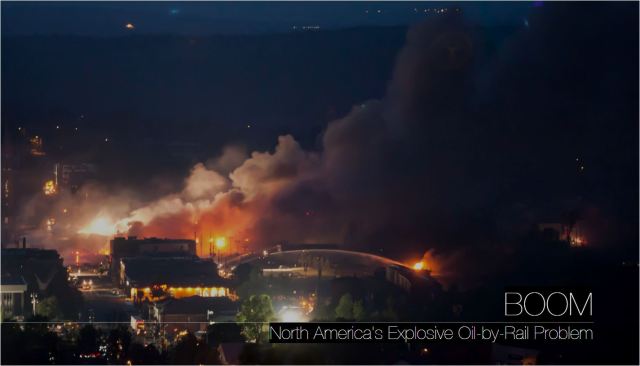
Those efforts in the past year and a half may have spared life and property in many communities. But they came too late for Lac-Mégantic, Quebec, a Canadian lakeside resort town just across the border from Maine. A train derailment there on July 6, 2013, unleashed a torrent of burning crude oil into the town’s center. Forty-seven people were killed.
“Sometimes it takes a disaster to get elected officials and agencies to address problems that were out there,” said Rep. Michael Michaud, D-Maine, a member of the House of Representatives subcommittee that oversees railroads, pipelines and hazardous materials, who’s leaving Congress after six terms.
Other subsequent but nonfatal derailments in Aliceville, Ala., Casselton, N.D., and Lynchburg, Va., followed a familiar pattern: massive fires and spills, large-scale evacuations and local officials furious that they hadn’t been informed beforehand of such shipments.
The U.S. Department of Transportation will issue a set of new rules in January regarding the transportation of flammable liquids by rail.
“Safety is our top priority,” said Kevin Thompson, a spokesman for the Federal Railroad Administration,“both in the rule-making and through other immediate actions we have taken over the last year and a half.”
Nevertheless, McClatchy has identified other gaps in the oversight of crude by rail:
- The Federal Railroad Administration entrusts bridge inspections to the railroads and doesn’t keep data on their condition, unlike its sister agency, the Federal Highway Administration, which does so for road bridges.
- Most states don’t employ dedicated railroad bridge inspectors. Only California has begun developing a bridge inspection program.
- The U.S. Department of Transportation concluded that crude oil from North Dakota’s Bakken shale region posed an elevated risk in rail transport, so regulators required railroads to notify state officials of large shipments of Bakken crude. However, the requirement excluded other kinds of oil increasingly transported by rail, including those from Canada, Texas, Wyoming, Colorado and Utah.
- While railroads and refiners have taken steps to reserve the newest, sturdiest tank cars available for Bakken trains, they, too, have ruptured in derailments, and Bakken and other kinds of oil are likely to be moving around the country in a mix of older and newer cars for several more years.

Staying power
American railroads moved only 9,500 cars of crude oil in 2008 but more than 400,000 in 2013, according to industry figures. In the first seven months of 2014, trains carried 759,000 barrels a day – that’s more than 200,000 cars altogether – or 8 percent of the country’s oil production, according to the federalEnergy Information Administration.
The energy boom, centered on North Dakota’s Bakken region, was made possible by hydraulic fracturing, or fracking, a horizontal drilling method that unlocks oil and gas trapped in rock formations. It was also made possible by the nation’s expansive rail system.
Crude by rail has become a profitable business for some of the world’s richest men. Warren Buffett, the billionaire investor, bought BNSF Railway in 2009. It’s since become the nation’s leading hauler of crude oil in trains. Bill Gates, the Microsoft founder and philanthropist, is the largest shareholder in Canadian National, the only rail company that has a direct route from oil-rich western Canada to the refinery-rich Gulf Coast.
Amid a worldwide slide in oil prices in recent weeks, crude by rail shows few signs of slowing down. The price per barrel of oil has dropped nearly 50 percent since last January. Still, the six largest North American railroads reported hauling a record 38,775 carloads of petroleum the second week of December.
“We anticipate that crude by rail is going to stay over the long term,” said Kevin Birn, director at IHS Energy, an energy information and analysis firm, and a co-author of a recent analysis of the trend.
Regulatory agencies and the rail industry may not have anticipated the sudden increase in crude oil moving by rail. However, government and industry had long known that most of the tank cars pressed into crude oil service had poor safety records. And after 180 years in business, U.S. railroads knew that track defects were a leading cause of derailments.
To be sure, railroads are taking corrective steps, including increased track inspections and reduced train speeds. They’ve endorsed stronger tank cars and funded beefed-up training for first responders.
Ed Greenberg, a spokesman for the Association of American Railroads, the industry’s principal trade group, said railroads began a “top-to-bottom review” of their operations after the Quebec accident.
“Every time there is an incident, the industry learns from what occurred and takes steps to address it through ongoing investments into rail infrastructure, as well as cutting-edge research and development,” he said. “The industry is committed to continuous improvement in actively moving forward at making rail transportation even safer.”
But the industry continues to resist other changes, including calls for more transparency. The dominant Eastern railroads, Norfolk Southern and CSX, sued Maryland to stop the state from releasing information to McClatchy about crude oil trains.
The industry also seeks affirmation from the courts that only the federal government has the power to regulate railroads. The dominant Western carriers, BNSF and Union Pacific, joined by the Association of American Railroads, sued California over a state law that requires them to develop comprehensive oil spill-response plans.
The railroads, used to keeping such information close to the vest, asked state officials to sign nondisclosure agreements treating the reports as confidential and limiting their release to those with “a need to know.”
Some states initially agreed, and the Transportation Department voiced no objections. Others, however, declined to sign the agreements, finding no reason to exempt the oil train reports from their open-records laws.
Since June, McClatchy has obtained full or partial Bakken train reports from 22 states. The reports show an estimated range of how many Bakken trains pass through each county each week, and the routes they use. Some states, such as Virginia and New York, released all the details. Illinois, however, didn’t reveal the routes. Alabama and New Jersey disclosed only the counties, not the routes or frequency.
Having lost the fight in California, Washington state and elsewhere, some railroads continued to press their case in other states that the reports were security and commercially sensitive. After the Pennsylvania Emergency Management Agency denied McClatchy’s request in July, McClatchy appealed the decision to the state’s Office of Open Records.
In October, the open records office ordered the emergency management agency to release the records. Days later, the agency posted them, in full, on its website.
In July, the Maryland Department of the Environment was about to release the Bakken reports to McClatchy when two railroads, Norfolk Southern and CSX, sued the state to block the release.
The Federal Railroad Administration all but put the issue to rest in October. In guidance published in the Federal Register, the agency said no federal law protected the Bakken train reports from public disclosure and that the information they contained was neither security nor commercially sensitive.
Delaware, West Virginia, Idaho and Tennessee, which denied McClatchy’s requests outright, haven’t reconsidered since the federal guidance. Texas has made no decision on how much information, if any, to release.
Greenberg, of the Association of American Railroads, said the industry remained concerned that publicly releasing the information “elevates security risks by making it easier for someone intent on causing harm.” The reports “should remain with local, state and federal emergency responders,” he added.
Mapped out, the reports show concentrated streams of Bakken traffic radiating from North Dakota to the Mid-Atlantic, Gulf Coast and Pacific Northwest. The reports do not, however, show smaller quantities of Bakken or any quantity of other kinds of crude oil shipped by rail. Individual railroads may be notifying emergency responders of such cargoes, but at least for now, they aren’t required to do so.
The Federal Railroad Administration has sought comment on whether the reporting threshold should be lower and include other types of crude oil.
Thompson, the railroad administration spokesman, said the May emergency order was meant to be “a powerful but narrowly constructed tool to address an imminent hazard,” the one presented by Bakken crude.
“It was and remains an interim step in our ongoing effort to ensure the safe transport of crude by rail,” he said.
In the dark
In March, emergency response officials in Sacramento, Calif., were stunned to learn that the decommissioned McClellan Air Force Base on the city’s northwest side had become a transfer point for crude oil.
After a McClatchy reporter told him about the facility, the city’s interim fire chief sent his battalion chief and a hazardous materials inspector to the site, where they found 22 tank cars loaded with crude oil. The facility had been operating for several months, without the knowledge of local fire chiefs or the county emergency manager. It had also been operating without a permit from theSacramento Metropolitan Air Quality Management District, apparently in violation of California’s strict environmental laws.
The same week McClatchy’s Sacramento Bee published a story in late March revealing its existence, the facility received a permit to transfer 11 million gallons of crude oil a month from trains to trucks.
In September, EarthJustice, a San Francisco-based environmental group, sued the air quality management district, challenging its decision to issue the permit without public comment or an environmental impact review.
In October, Sacramento County’s top air-quality official rescinded the permit, acknowledging that its approval was a mistake. The McClellan transfer operation shut down in mid-November.
Two or three Bakken trains a month are moving through California’s capital to other destinations, and area officials are bracing for a big increase: TheCalifornia Energy Commission projects that rail could deliver 22 percent of the state’s petroleum needs in a few years.
In response to growing concern about emergency preparedness amid the rise in crude by rail, the industry established a special training program at its research and testing facility in Pueblo, Colo.
Since classes began in July, the nation’s largest railroads have spent $5 million to train 1,500 emergency response personnel at the school. Sen. Heidi Heitkamp, D-N.D., persuaded the Federal Emergency Management Agency to contribute another $5 million to continue the program.
“Our emergency responders are often our first line of defense – and they usually do it without pay,” Heitkamp said Monday in a statement. “It’s on all of us to make sure they have the training and resources they need to protect our families and communities.”
Individual railroads also bring training to many communities along their routes. CSX, for example, just concluded an 18-city tour with its Safety Train, a mobile classroom that educates first responders on the basics of responding to rail accidents. The railroad said 2,200 personnel from 350 departments had participated.
But the training may have its limits.
The National Fire Protection Association estimated that in 2009, the most recent year for which statistics are available, there were about 1.1 million firefighters spread across 30,000 departments. More than 800,000 of them were volunteers. Nationwide, volunteer departments have turnover rates of 20 percent to 50 percent.
Steve LoPresti, the hazmat chief for Montgomery County EMS in suburban Philadelphia, said his department was all-volunteer. The department has a “robust” training schedule, he said, and has worked with other agencies as well as railroads hauling crude oil through the county.
But it can be tough for volunteers to take the time off for training, even if someone else pays for it.
“They have full-time jobs, maybe part-time jobs,” LoPresti said. “They’re family men. They have other responsibilities.”
Lac-Mégantic showed the enormous risk that even the best-trained firefighters might face. In Senate testimony last April, Tim Pellerin, a Maine fire chief whose department assisted its Quebec neighbor, said it had taken 1,000 firefighters from 80 departments on both sides of the U.S.-Canadian border 30 hours, a million gallons of water and 8,000 gallons of firefighting foam to bring the massive blaze under control.
Rick Edinger, assistant chief of the Chesterfield County, Va., Fire and EMS department and a hazardous materials expert who testified on oil train fires at the National Transportation Safety Board in April, said in an interview that most departments were capable of responding to an incident involving a 9,000-gallon gasoline tanker truck. But one rail car can hold as much as 30,000 gallons. A 100-car oil train could contain 3 million
“Once you reach that point of no return,” he said, “it doesn’t matter what the volume is.”
Unheeded warnings
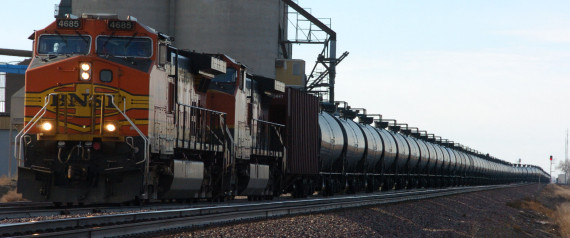
A common thread runs through the Lac-Mégantic, Aliceville and Casselton derailments: the workhorse DOT-111 tank car. The NTSB has been warning about it for decades.
The car is minimally reinforced and has a well-documented tendency to puncture or rupture in derailments.
A series of explosions from the late 1960s to the late 1970s killed dozens of people, including railroad workers and first responders, prompting an overhaul of the pressurized tank cars then used to haul flammable and toxic gases with many of the same features under discussion now.
The problems subsided by the early 1980s. But unlike those cars, the DOT-111 wasn’t similarly retrofitted. And it continued to fail catastrophically in derailments that involved flammable or poisonous liquids, as three decades of NTSB accident reports reviewed by McClatchy demonstrate.
Many of those accidents – from Newark, N.J., in 1981 to Dunsmuir, Calif., in 1991 to Baltimore in 2001– were caused by track defects or human error. But in report after report, the NTSB warned that the design of the DOT-111 tank car increased the severity of these accidents.
About a decade ago, railroads began transporting large volumes of ethanol, a renewable, highly flammable alternative fuel. Rail transportation of ethanol grew over several years, peaking at 360,000 carloads in 2011. At least seven fiery derailments from 2006 to 2012 involving ethanol transported in DOT-111 cars sent another warning.
In June 2009, a Canadian National train derailed on washed-out track at a road crossing at Cherry Valley, Ill. Multiple DOT-111 tank cars punctured, spilling more than 300,000 gallons of ethanol. A woman was killed when the massive blaze engulfed her vehicle at the crossing.
The Association of American Railroads petitioned the Pipeline and Hazardous Materials Safety Administration in March 2011 for an improved tank car design. About a year later, then-NTSB Chairman Deborah Hersman wrote Cynthia Quarterman, who was then the head of the Pipeline and Hazardous Materials Safety Administration, pleading for improvements to the DOT-111. In her reply, Quarterman concurred with Hersman but expressed concerns about the cost.
Two months after Lac-Mégantic went up in flames in July 2013, Quarterman’s agency released its Advance Notice of Proposed Rulemaking, the first step in the usually lengthy process.
Last July, the Transportation Department proposed a 2017 deadline to phase out or retrofit the DOT-111 fleet. But for now, the car is ubiquitous in crude oil and ethanol trains nationwide.
Among other steps taken by the department this year, the Federal Railroad Administration’s Thompson noted that it had “issued a safety advisory requesting companies to take all possible steps to avoid using DOT-111 tank cars when transporting Bakken crude.”
That wasn’t enough to satisfy environmental groups, which petitioned the Transportation Department for an immediate ban on DOT-111 cars hauling Bakken crude oil. When the department denied the petition, the groups sued.
Railroads generally don’t own the tank cars used to transport oil by train.
Since the more recent high-profile accidents, many refiners have opted to go with the higher standard the rail industry adopted voluntarily in 2011, with thicker shells and extra shielding on the ends of the cars, as well as features that protect top and bottom valves in case of a derailment.
BNSF and Canadian Pacific, two of the biggest Bakken haulers, have imposed surcharges on crude oil shippers who use pre-2011 tank cars.
However, the oil and rail industry’s principal trade groups have requested that regulators give them more time to phase out the cars. Under both government and industry proposals, the cars with the fewest protections could remain in crude oil service through 2020.
The $1.1 trillion spending bill Congress approved in December contains a requirement that the DOT issue its final rule by Jan. 15.
Even the newer cars have vulnerabilities. Post-2011 cars involved in a derailment last January in New Augusta, Miss., spilled 50,000 gallons of heavy Canadian crude.
So did at least one newer car in Lynchburg, which released its entire contents of Bakken crude into the James River, most of which burned. The city’s downtown was spared.
Some of the most vocal advocates for a more aggressive timeline for retrofitting or retiring the DOT-111 fleet are elected leaders in cities and towns. Karen Darch, the village president of Barrington, Ill., a Chicago suburb, has testified on Capitol Hill and submitted comments to regulators. Two busy rail lines intersect in her community, and trains carrying crude oil and ethanol pass within feet of homes, businesses and schools.
“We have people who are, quite literally, sitting ducks,” she said.
The repairs I see them making right now are more like putting a Band-Aid on a gaping wound
John Wathen, environmentalist

CURTIS TATE / MCCLATCHY On April 30, 2014, a CSX train carrying Bakken crude oil derailed in downtown Lynchburg, Va. No one was injured or killed but three tank cars went into the James River spilling 30,000 gallons of oil and igniting a fire. Above, video of trains outside Lynchburg on a normal day.
 CURTIS TATE / MCCLATCHY
Repeated violations
In Tuscaloosa, repairs are underway on the century-old bridge. But its condition had received less attention from local, state and federal authorities, and the railroad that maintains it, before crude oil trains began rolling over its rotting timbers in 2013.
The local industrial development authority gave $785,000 in tax abatements to the Hunt Refining Co. to build a two-track rail terminal capable of unloading 600,000 gallons of crude oil a day at its Tuscaloosa refinery.
Mike Smith, a lawyer for the agency, said its jurisdiction didn’t extend beyond the refinery and that it had no authority to evaluate the condition of, or require repairs to, the rail infrastructure that leads to it. A spokeswoman for Hunt, based in Houston, declined to comment.
The Alabama Department of Environmental Management quickly approved Hunt’s permits to build and operate the terminal, with no public comment or review. A spokesman for the department didn’t return multiple phone calls seeking comment.
The Federal Railroad Administration doesn’t inspect bridges. That responsibility rests with the railroad.
The Alabama Southern Railroad, which is owned by Watco, a company headquartered in Pittsburg, Kan., maintains the Tuscaloosa bridge and the track that runs across it. Regulators have cited the company many times over the years for safety violations. Federal Railroad Administration inspection reports obtained through a Freedom of Information Act request show that inspectors recommended penalties for Alabama Southern 15 times from January 2006 to September 2013.
In June, an Alabama Southern train carrying crude oil derailed in Buhl, Ala., about 12 miles west of Tuscaloosa. Though nothing spilled, seven battered tank cars remained on the ground for the next two months, a short distance from people’s front porches.
Tracie VanBecelaere, a Watco spokeswoman, said the company would invest as much as $17 million over three years in new rail, ties and ballast on the 62-mile Alabama Southern line between Tuscaloosa and Columbus, Miss.
In late October, bundles of new crossties lined the track near a road crossing in Northport, across the river from Tuscaloosa. Tie replacements “will continue for several months,” VanBecelaere said.
She said the track was inspected more than federal law required and was checked ultrasonically for internal defects twice a year.
The old bridge is getting a $2.5 million overhaul as part of the same project, VanBecelaere said. She said it had passed an inspection over the summer.
John Wathen, an environmentalist who’s been monitoring the condition of the rail infrastructure around Tuscaloosa for the past year, wonders whether it’s enough.
“The repairs I see them making right now are more like putting a Band-Aid on a gaping wound,” he said .
Nothing would have survived within the fire footprint. We’ve seen that already.
John Wathen, environmentalist

Potential for disaster
October is a busy time in Tuscaloosa, with Alabama football season in full swing. One home-game weekend this year, there were no hotel rooms available within 50 miles of the city. Tuscaloosa’s population expands on home game days. The university’s Bryant-Denny Stadium can hold more than 100,000 fans.
The railroad bridge is perhaps more than a mile from the stadium, as the crow flies. Across the river in Northport, a whole encampment of recreational vehicles owned by football fans sits just 50 feet from the structure. The city council allows the tailgaters to park their campers there for the season’s duration.
The 7,500-seat Tuscaloosa Amphitheater, which recently hosted Mary J. Blige and the Doobie Brothers, sits near the bridge on the opposite bank. The Oliver Lock and Dam, a popular fishing spot, is about half a mile downriver.
Thousands more people descend on Northport in October for the annualKentuck Festival of the Arts.
Most Tuscaloosa residents know about the bridge and some have stories about how it intersects with their lives. But few know about the hazardous cargoes that creep across it in slow-moving trains, and with them the potential for disaster.
And Tuscaloosa knows disaster. On April 27, 2011, a powerful tornado, with winds of 190 mph, ripped through the city, chewing up neighborhoods, schools and shopping centers. Of the 65 Alabamians killed by the tornado that day, 52 were in Tuscaloosa.
For Wathen, a big worry is that if an oil train derailed on or near the bridge, it wouldn’t take long for the spilled cargo to reach the Black Warrior River. Once it reached the dam, Wathen said, it would be virtually impossible to clean up, no matter what kind of oil it was.
“It would be an environmental catastrophe,” he said.
Wathen has other fears, as well. In addition to the 47 fatalities, the derailment and fire in Lac-Mégantic destroyed 50 buildings, consuming the heart of the city’s business district.
“Lay that footprint over Tuscaloosa or Northport,” Wathen said. “Nothing would have survived within the fire footprint. We’ve seen that already.”
Email: ctate@mcclatchydc.com; Twitter: @tatecurtis





 Martinez Environmental Group